TL;DR
- Manual order tracking creates coordination overhead, order entry errors (1-5% typical), billing delays, and working capital trapped waiting for invoices
- Sales overpromises without capacity visibility, production scrambles with wrong priorities, QC backlogs create delays, dispatch happens chaotic and last-minute, billing lags
- Clear warning signs: customers call daily for status, teams spend 2+ hours on manual updates, invoices go out 5-7 days late
- The automation gap matters because competitors digitizing order management today will own your market share in five years while manual shops keep losing customers to better-run competitors.
- Start by auditing your true cost of manual tracking for one week, then calculate annual impact, explore focused order management modules
A $1 billion industrial machinery manufacturer faced a crisis in early 2023. Order delays had climbed so high that customers were canceling contracts. Payments were coming in late. Working capital was hemorrhaging.
The leadership team couldn’t understand why.
Production was running at 85% capacity. Machines were humming. Workers were putting in overtime. Yet orders kept arriving late. Customers kept complaining. Revenue kept slipping away.
The root cause wasn’t production speed. It was buried in dozens of Excel sheets, WhatsApp groups, and phone calls that tracked where each order actually was.
- Sales didn’t know which batches were running
- Production didn’t know which orders were urgent
- Dispatch didn’t know what was ready to ship
- Finance couldn’t bill because nobody told them goods had left the building
Cash was locked in the system because nobody knew what stage orders were actually in.
If your operations team spends more time answering “Where’s my order?” than planning production, you’re not alone. And you’re paying for it every single day.
Why Manual Order Tracking Still Feels Normal (Until It Breaks)
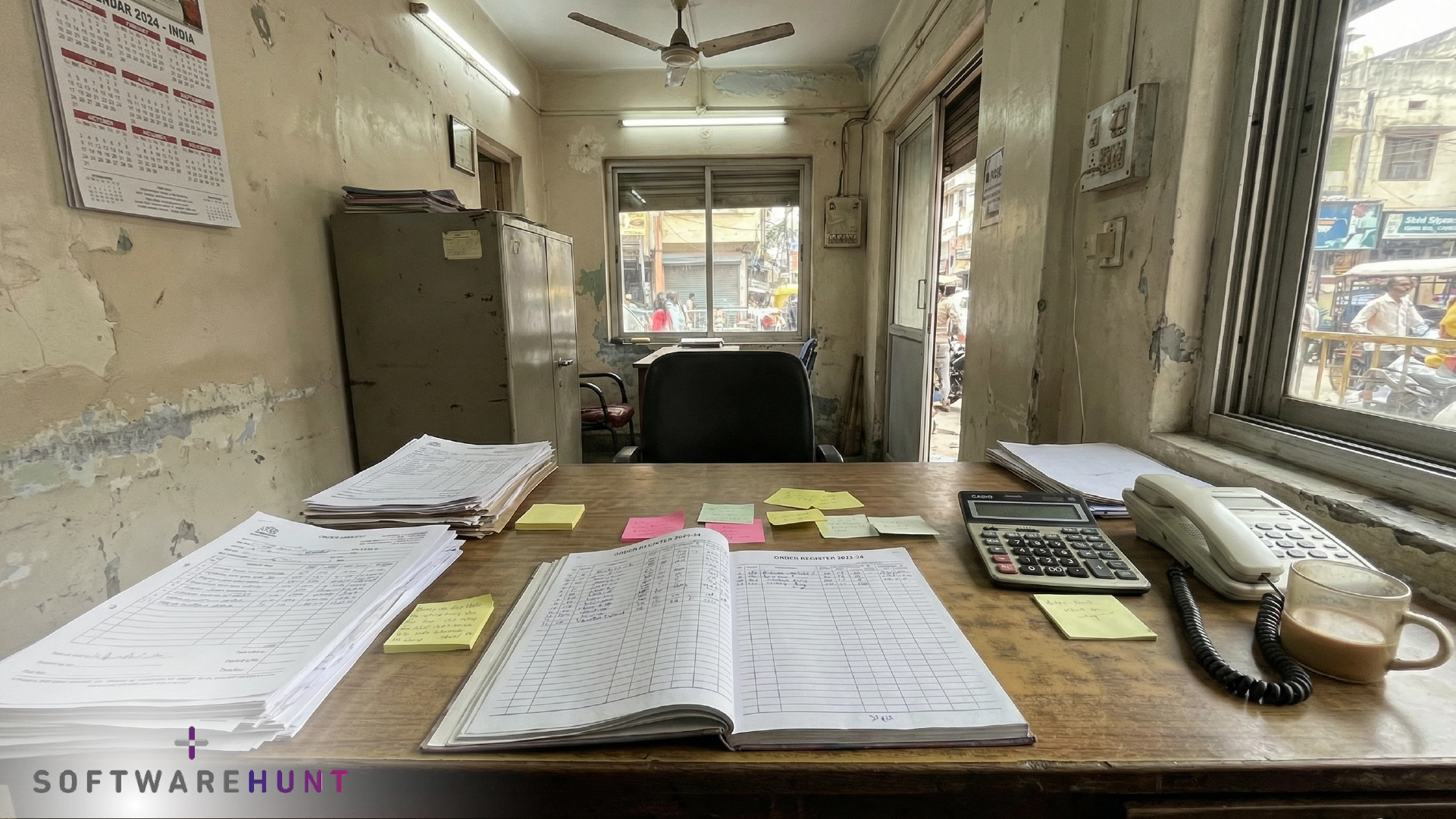
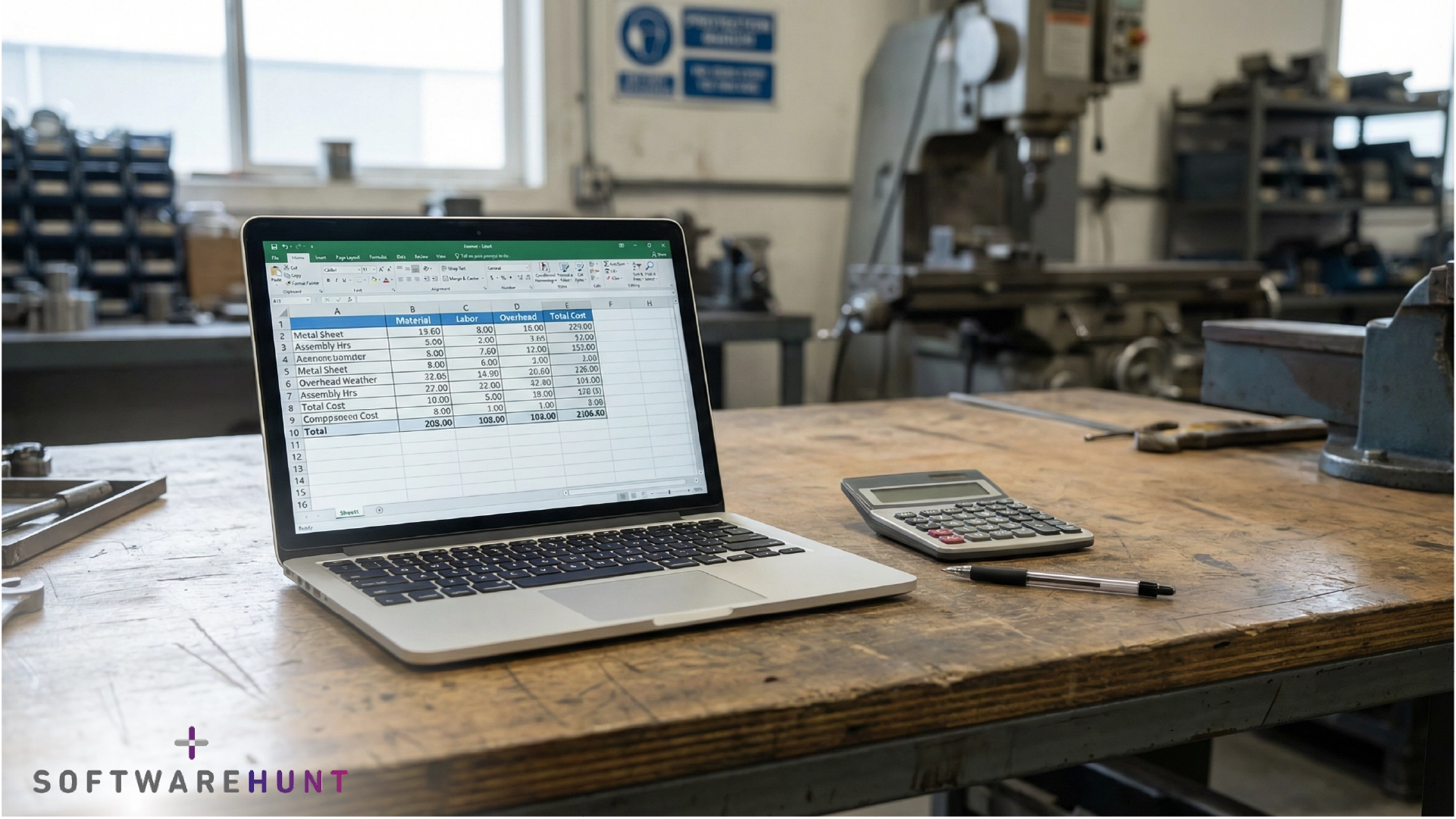
Most mid-sized manufacturers start tracking orders manually because it feels flexible, cheap, and familiar. Excel works. WhatsApp is free. Phone calls get immediate answers.
When you’re handling 20-30 orders a month, this system holds together.
But as order volume climbs to 50, then 100, then 200 active orders at any time, something shifts. What felt manageable becomes a daily firefight:
- Sales reps spend two hours chasing production updates
- Operations heads can’t give a straight answer about order status without spending 30 minutes compiling data from five different sources
- Customers start calling twice a day asking where their shipment is
The breakdown happens gradually. Leadership doesn’t realize the scale of the problem until a major customer threatens to leave or cash flow suddenly collapses because billing has been delayed for two weeks.
Here’s what makes this invisible: Manual order tracking doesn’t show up as a line item on your P&L. You don’t see an expense labeled “order tracking errors” or “production coordination failures.”
But you’re paying for it through:
- Lost sales when customers take orders to competitors
- Customer churn when relationships strain from repeated delays
- Rework costs when wrong batches get produced
- Overtime to fix mistakes and expedite shipments
- Cash trapped in the system because nobody knows what stage orders are really in
That’s real money walking out the door because someone wrote down the wrong quantity, production built to an outdated spec, or dispatch loaded the wrong batch onto a truck.
The Real Costs Buried in Your Daily Operations
Let’s break down what manual order tracking actually costs in rupees and hours.
Manual Errors That Cascade Into Disasters
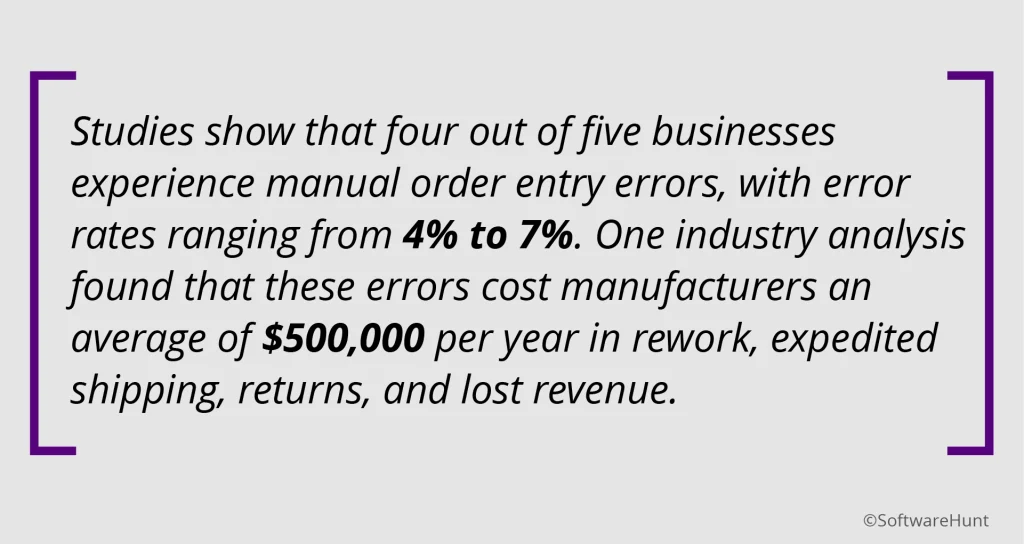
Manual order processing has an average error rate of 3%, meaning 3 out of every 100 orders contain mistakes.
Some sources report even higher rates: 10% or greater error rates in certain operations.
Here’s what happens when an order goes wrong:
- Sales team copies the wrong quantity from a customer email
- Production supervisor misreads handwritten notes
- Dispatch picks the wrong batch because the label was unclear
- QC catches the mistake after the batch is finished
Correcting an order error could cost a company 50% to 125% of the cost of the product in the first place.
That cost includes:
- Raw materials wasted on wrong batch
- Labor hours spent on rework
- Angry customer relationships
- Expedited shipping to fix the mistake
- Possible returns, refunds, or discounts to keep the customer
For a manufacturer processing 200 orders per month with an average order value of ₹2 lakh, a 3% error rate means 6 orders go wrong every month. Even if only half require significant rework or expedited shipping, you’re losing ₹3-5 lakh monthly in direct costs. Annually, that’s ₹36 lakh to ₹60 lakh.
The Efficiency Collapse That Nobody Tracks
Industry studies show the majority of manufacturers (70-80%+) report efficiency and productivity declines due to order errors, with impacts including delayed fulfillment, customer dissatisfaction, and increased operational costs.
But there’s a broader cost hiding in plain sight:
Businesses relying on manual order processing incur 30% higher operational costs than those with better visibility.
That 30% overhead comes from:
- Sales reps spending 2+ hours daily chasing order status updates
- Operations heads pulling data from 5+ different sources to answer one question
- Finance teams unable to bill on time because they don’t know goods have shipped
- Constant phone calls and WhatsApp messages interrupting focused work
- Dispatch teams loading trucks last-minute without proper verification
For a plant with 10 people involved in order management, that represents 50 person-hours per day spent moving information instead of moving product. Over a month, that’s 1,000 hours of work just coordinating and chasing data.
The Billing Lag That Strangles Cash Flow
Here’s one most manufacturers miss:
In a manual order tracking system, billing can’t happen until someone manually confirms goods have been dispatched, checks delivery proof, verifies quantities, and then tells finance to raise an invoice.
This process takes 5-7 days in most mid-sized plants.
Every day of billing delay represents working capital stuck in limbo.
If your monthly revenue is ₹5 crore and billing is delayed by an average of 6 days, you have roughly ₹1 crore tied up at any given time just waiting for invoices to go out.
That’s ₹1 crore you can’t use to:
- Buy raw materials
- Pay suppliers
- Fund the next production run
- Invest in growth
It’s sitting there because nobody connected dispatch to billing systematically.
The Inventory Mismatch Tax
When order tracking is manual, recorded inventory and actual stock rarely match.
Sales accepts an order believing stock is available. Production starts only to discover materials are short. Emergency procurement at premium prices. Batch delays. Customers unhappy.
A ₹75 crore manufacturer with ₹15 crore in stock could lose ₹75 lakh in wrong stock or emergency purchases that shouldn’t have happened if there is even a 5% mismatch.
How Manual Tracking Creates Bottlenecks That Ripple Through Everything
Tracking orders by hand doesn’t just make mistakes. It makes a chain of delays that get worse at each step.
Orders come in 10 different formats, which causes problems right away.
Companies that make things get orders like this:
- PDFs sent by email
- Excel sheets that customers send
- Faxes written by hand (still in 2026)
- Text in an email that isn’t structured
- Phone calls that need to be typed up
- Messages in WhatsApp groups
You have to handle each format in a different way. There is a point in each format where information is lost or misinterpreted.
Orders Arrive in 10 Different Formats, Creating Immediate Friction
Manufacturing companies receive orders as:
- PDFs from email
- Excel sheets from customers
- Handwritten faxes (still, in 2026)
- Unstructured email text
- Phone calls requiring transcription
- Messages in WhatsApp groups
Each format requires different handling. Each format is a point where information gets lost or misinterpreted.
The sales team spends time deciphering poorly formatted orders. Production planning gets delayed. Material procurement is pushed back. Customer delivery dates slip before anyone even starts production.
Production Planning Based on Stale Data
Production schedules get built based on what sales thinks is urgent, but sales doesn’t know what’s actually feasible because they can’t see:
- Live production capacity
- Current material availability
- Which batches are already running
- Which orders have higher priority
Operations plans batches based on yesterday’s information because today’s data hasn’t been compiled yet.
The result? Production starts Batch A only to discover halfway through that a higher-priority customer order should have gone first. Now everyone is scrambling to pause one job, rush another, and explaining to both customers why delivery is delayed.
The Dispatch Chaos at 5 PM
Walk into most mid-sized plants at 5 PM and you’ll see the same thing every day:
Dispatch happens in a mad rush.
Operations team frantically checks which batches passed QC today. Sales team calling to confirm which customer needs goods urgently. Stores team manually verifying stock. Dispatch coordinator loading trucks based on handwritten notes, hoping nothing is wrong.
High chance of wrong items getting loaded. High chance of incomplete shipments. No time to verify everything properly because the truck needs to leave in 30 minutes.
Wrong item selection during order picking is a leading cause of fulfillment delays, customer complaints, and trust erosion. Common picking errors include wrong items, wrong quantities, failed picks, and damaged/mislabeled items, each requiring costly correction.
Sales Overpromises Because Nobody Has Visibility
Sales teams operate in the dark.
A customer calls asking for an urgent order. Sales doesn’t know:
- Current production capacity
- Material availability
- QC backlog status
- Which orders already committed that capacity
So they say yes. Promise delivery in 10 days. Hope production can make it happen.
Production gets the order request, realizes it conflicts with three other priorities, and now everyone is scrambling. The customer gets a call three days before the deadline saying there will be a delay.
Trust damaged. Relationship strained. The next order might go to a competitor.
Finance Drowns in Manual Reconciliation
Finance can’t bill until they manually verify:
- That goods actually left the warehouse
- That the quantity shipped matches the invoice quantity
- That the customer PO matches the shipment
- That all supporting documentation is attached
This 5-7 day lag means cash stays frozen waiting for invoices to go out. The actual work might take hours, but the coordination and verification takes days because it’s all manual, fragmented, and dependent on people checking their email.
Why SoftwareHunt?
We’re SoftwareHunt. We work with manufacturing owners running on Tally, Excel, and lean teams to understand your operational leaks and growth challenges. Our team is happy to connect with you, understand your personal pain points, operational leaks and growth challenges and go beyond platform listings/information to help find the right solution for you.
We’ll help you translate symptoms into clear financial insight and show you where to focus first – at no cost to you.
To email an advisor for a quick fit-check write to us at connect@softwarehunt.com
The $1 Billion Manufacturer’s Crisis (And How It Happened)
Let’s go back to the machinery manufacturer. Here’s exactly what their manual tracking system looked like:
Daily Reality:
- 200+ active orders in the system at any given time
- Sales team using Excel to track “committed orders”
- Operations team using a different Excel sheet to track “active production”
- QC team using handwritten logs to track “batches in testing”
- Dispatch team using post-it notes to track “what’s ready to ship”
- Finance team using a spreadsheet to track “invoiced orders”
The gaps:
- Sales promised delivery based on last week’s capacity (which was already 85% used)
- Production started batches that weren’t the highest priority
- QC delays meant batches sat waiting for manual approvals that could take days
- Dispatch didn’t know which batches had actually passed QC
- Finance didn’t know which batches had actually shipped
- Customers called asking “Where’s my order?” and nobody had a quick answer
The cascade:
- Late order entry leads to production schedules pushed back
- Inaccurate quantities leads to material expediting at premium prices
- Poor demand visibility leads to either excess inventory or stockouts
- Each inefficiency multiplied the next
The result:
Order delays climbed. Customers threatened to leave. Working capital hemorrhaged. All while the factory was running at 85% capacity with machines humming and workers doing overtime.
When they finally fixed the coordination problem by ensuring information moved at the same speed as goods—order delays dropped by 10% within six months simply because they stopped losing orders in the chaos between departments.
The Warning Signs You’ve Outgrown Manual Order Tracking
If three or more of these describe your daily reality, manual order tracking is costing you serious money:
- Customers call daily asking for order status, and your team scrambles to compile answers
- Sales and operations teams spend 2+ hours per day chasing updates via WhatsApp, phone, email
- Invoices go out 5-7 days after dispatch because billing waits for manual confirmation
- Production priorities change hourly because sales doesn’t know actual capacity or material availability
- Dispatch happens in the last two hours of every shift in a chaotic rush, with frequent loading errors
- You can’t answer “How many orders are running late right now?” without spending 30+ minutes pulling data from multiple sources
- Order errors (wrong quantity, SKU, specs, delivery address) happen at least weekly
- Days Sales Outstanding (DSO) sits above 75 days and keeps growing because billing lags
- Your operations head spends mornings drowning in WhatsApp messages, phone calls, and emails chasing order status
If you checked five or more, manual order tracking is likely costing your company ₹50 lakh to ₹2 crore annually in direct and indirect losses.
What Actually Needs to Happen
Step 1: Audit Your Current Order-to-Cash Cycle
The Order-to-Cash (O2C) cycle measures the time from when a customer places an order until cash payment arrives in your account.
O2C Cycle Time = Order Processing Time + Production Lead Time + QC Hold Time + Dispatch Time + Invoicing Lag + Days Sales Outstanding (DSO)
Break this into measurable components:
- Order Processing Time: Days from customer order receipt until production confirms the order. In manual systems, this averages 1-3 days as orders move through email chains, Excel updates, and capacity checks.
- Production Lead Time: Days required to manufacture. Typically 5-30 days.
- QC Hold Time: Days batches sit waiting for quality approval. Manual processes can add 2-7 days.
- Dispatch Time: Days from QC approval to goods leaving facility. Manual coordination can take 1-3 days.
- Invoicing Lag: Days from dispatch until invoice generation. Manual billing typically requires 5-7 days.
- Days Sales Outstanding (DSO): Days customers take to pay after receiving invoice.
Example:
If your process takes:
- 2 days order processing
- 15 days production
- 4 days QC hold
- 2 days dispatch coordination
- 6 days invoicing lag
- 60 days DSO
Your total O2C cycle = 89 days
This means cash invested in fulfilling an order takes 89 days to return. For a manufacturer with ₹5 crore monthly revenue, approximately ₹15 crore sits trapped in the O2C pipeline at any given time.
Reducing O2C by just 15 days (primarily through faster order processing, dispatch coordination, and billing) frees approximately 17% of that working capital, translating to ₹2.5 crore that becomes available for materials, supplier payments, or growth investments.
Step 2: Quantify the Current Cost
For one week, track:
- How many hours your teams spend on manual order coordination
- How many order errors happen
- How many days it takes from dispatch to invoice
- How many times customers call asking for status
Multiply by 52 weeks. That’s your annual cost of staying manual.
For most mid-sized manufacturers, this number is between ₹50 lakh and ₹2 crore per year.
Step 3: Map Your Order Journey (Without Romanticizing It)
Write down exactly how an order moves through your business:
- How does the customer order arrive?
- Who receives it?
- Who enters it into your system?
- When does production learn about it?
- How does production know what priority it is?
- When does dispatch know goods are ready?
- How does finance know to invoice?
- How does the customer know when to expect delivery?
As you map it, you’ll see the gaps. The places where information gets lost. The places where people make phone calls or send WhatsApp messages instead of having a clear process.
Step 4: Fix the Biggest Bottleneck First
Don’t try to fix everything at once.
Identify the single biggest bottleneck that’s:
- Costing you the most money
- Causing the most customer complaints
- Creating the most rework
For most manufacturers, it’s one of three:
Bottleneck A: Order Processing Delays
If orders sit 2-3 days before production even sees them, fix this first. Create a simple rule: orders go to production within 4 hours of receipt. No exceptions.
Bottleneck B: Dispatch-to-Billing Delays
If invoices go out 5-7 days after dispatch, this is your biggest cash leak. Create a rule: invoice goes out the same day goods leave the warehouse. No waiting for confirmation or reconciliation.
Bottleneck C: Production Priority Chaos
If production doesn’t know which orders are urgent, and sales doesn’t know what’s actually feasible, fix communication. Create a daily 15-minute call between sales and operations where you say: “These are the active orders. These are the priorities. Production confirms what’s realistic.”
Step 5: Build Simple Rules (Not Complex Systems)
You don’t need a ₹40 lakh software implementation to fix this.
You need clarity and rules that everyone follows:
- Rule 1: Orders enter the system within 4 hours of receipt. No Excel, no WhatsApp.
- Rule 2: Sales knows production capacity in real time. Daily sync call between sales and ops.
- Rule 3: QC has 48-hour turnaround on routine tests. Escalate anything that takes longer.
- Rule 4: Dispatch confirms goods shipped by 5 PM same day. Finance invoices by next morning.
- Rule 5: No production starts without customer PO being verified and materials being confirmed as available.
These rules cost nothing to implement. They cost everything if you don’t.
Step 6: Track Three Metrics Weekly
Every single week, without fail:
- O2C Cycle Time: How many days from order to payment? Target: reduce by 5 days per quarter.
- Order Error Rate: How many orders had mistakes? Target: reduce by 20% per quarter.
- Dispatch-to-Invoice Time: How many days between goods leaving and invoice going out? Target: reduce to 1 day.
If you’re not measuring these three, you’re flying blind. If you’re flying blind, nothing improves.
The Reality Check: What Staying Manual Actually Costs
Staying manual feels cheaper in the short term because you’re not paying for software or implementation.
But you’re paying a much larger bill every single month through:
- Wasted labor (2-3 hours daily per person coordinating instead of producing)
- Lost customers (who switch to competitors offering better visibility)
- Trapped cash (billing delays, inventory mismatches)
- Errors that compound (wrong quantities, missed deliveries, rework)
- Opportunity cost (can’t see capacity, can’t commit to large orders, can’t grow)
The math is brutal:
- ₹60 lakh annually in manual coordination overhead
- ₹80 lakh in errors and rework
- ₹1 crore in delayed billing
- = ₹2.4 crore per year for the “free” manual system
You’re paying ₹2.4 crore annually to avoid investing the upfront time to fix your order coordination.
The real cost of staying manual is what you lose over the next two years while competitors with better order visibility keep taking your customers, delivering faster, and growing their market share.
What To Do This Week
Week 1: Audit Your Current State
Track for one week how many hours your teams spend on manual order coordination. Count how many order errors happen. Measure how many days it takes from dispatch to invoice. Write it down.
Week 2: Quantify the Cost
Use the numbers from Week 1 to calculate what manual tracking actually costs you annually in labor, errors, and delayed cash flow. Show this to your leadership team.
Week 3: Map Your Order Journey
Write down step-by-step how an order moves through your business. Identify the 3 biggest bottlenecks—the places where orders get stuck or information gets lost.
Week 4: Pick One Fix
Pick the single biggest bottleneck and implement one simple rule that fixes it. Not comprehensive. Not perfect. Just better.
For example:
- If dispatch-to-billing is your bottleneck: “Invoices go out the same day goods leave. No waiting.”
- If order processing is your bottleneck: “Orders go to production within 4 hours of receipt.”
- If dispatch chaos is your bottleneck: “Dispatch happens at 3 PM with full reconciliation, not at 5:30 PM rushed.”
Week 5 & Beyond: Measure & Iterate
Track your three metrics (O2C cycle time, error rate, dispatch-to-invoice time) every week. You’ll see improvement within 30 days.
The Hard Truth
When customers keep calling, billing stays delayed, and dispatch feels chaotic, the real problem isn’t your production capacity or your team’s work ethic.
The problem is that information moves slower than goods, creating a coordination bottleneck that strangles operational flow.
You can’t fix what you can’t see. You can’t improve what you don’t measure.
Calculate your Order-to-Cash cycle this week. Identify which component drains the most time. Then fix that specific bottleneck before moving to the next.
Why SoftwareHunt?
We’re SoftwareHunt. We work with manufacturing owners running on Tally, Excel, and lean teams to understand your operational leaks and growth challenges. Our team is happy to connect with you, understand your personal pain points, operational leaks and growth challenges and go beyond platform listings/information to help find the right solution for you.
We’ll help you translate symptoms into clear financial insight and show you where to focus first – at no cost to you.
To email an advisor for a quick fit-check write to us at connect@softwarehunt.com