Key Takeaways
- Digital B2B ordering transforms operations, not just efficiency.
- AI-powered WhatsApp agents handle 80% of interactions.
- Real-time inventory sync eliminates backorders.
- Contract pricing automation stops disputes entirely.
- Result: 35% faster fulfillment, 25% fewer errors, 80% fewer support calls.
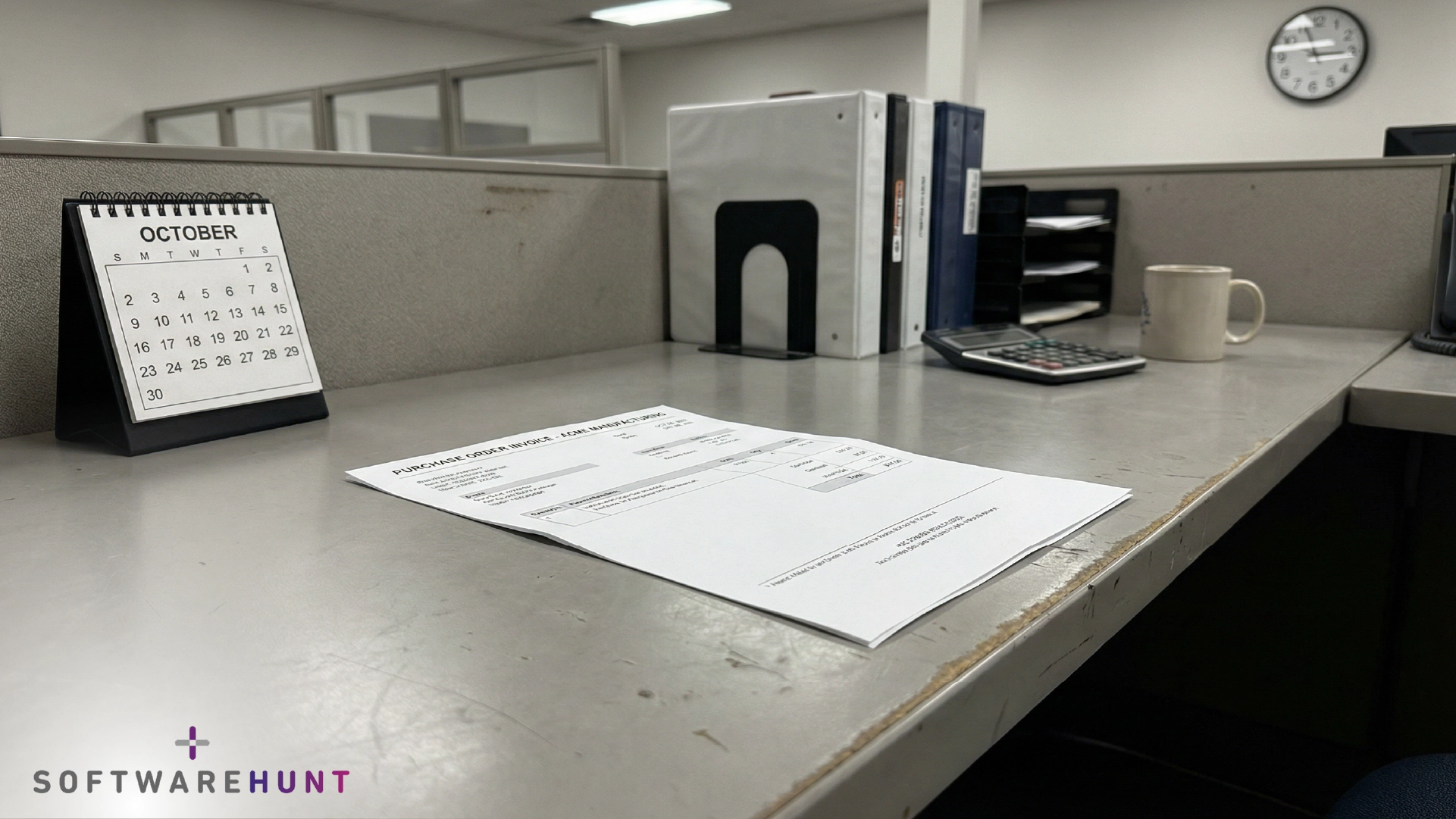
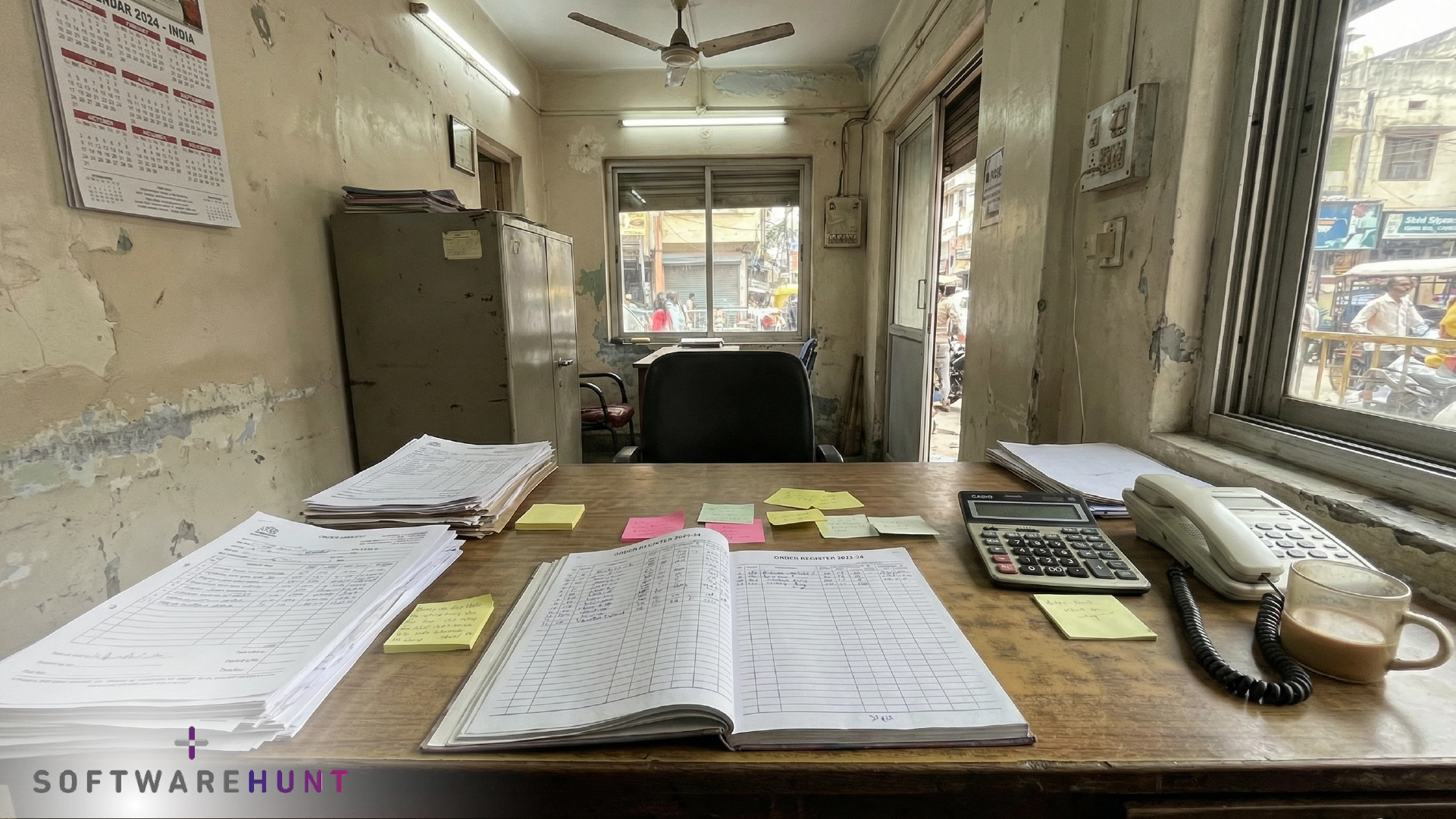
Priya sits in her office at 3 PM, staring at her order backlog.
Fifteen WhatsApp messages from customers. Five voice notes she needs her team to transcribe. Three pricing disputes (did she quote ₹85/unit or ₹95/unit?). Two duplicate orders because customers didn’t realize they’d already ordered. One angry email from her biggest account: “Why does it take 36 hours to confirm my order?”
She does the math in her head. Fifteen errors per day × ₹6,000 per error to fix = ₹90,000 monthly. Her team is drowning. Her competitors are pulling ahead.
That’s when she decided: This stops next month.
Rajesh, running a similar distribution business three units down, watches Priya’s operation grow 30% in six months while his stays flat. He finally asks her what changed.
Rajesh: How are you handling more volume with the same team?
Priya: I stopped fighting with WhatsApp. Moved to a proper ordering system.
Rajesh: Portal? I looked at enterprise solutions. Eight lakh setup. Can’t justify it.
Priya: That’s not what I’m talking about…
Why B2B Digital Ordering Matters Now
The B2B e-commerce market is $32.11 trillion in 2025, growing at 14.5% annually. This isn’t a niche anymore. It’s the default.
Indian SMEs who adopt digital ordering see 51% higher revenues and 49% more profit than their offline-only counterparts. That’s not aspirational. That’s what’s actually happening right now while you’re still managing orders through WhatsApp.
Your customers expect what Amazon gave them in 2007. They want 24/7 ordering. They want to see their price instantly. They want tracking information in real-time. When you make them call and negotiate for two hours, they don’t think you’re personal. They think you’re outdated.
Meanwhile, your competitor who implemented a portal six months ago is handling 40% more volume with the same team size. They’re offering next-day delivery. They’re pricing more aggressively. They’re winning customers you’re losing because your process still requires human back-and-forth.
Key Insight: The cost of staying manual isn’t zero. It’s ₹80-150K per month in hidden inefficiencies – errors, delays, disputes, and support overhead.
The Hidden Costs of Manual Orders
Rajesh sits across from Priya at their regular chai spot in Pune. He’s watching her order book grow while his stays flat. Finally, he asks.
Rajesh: Your order numbers have jumped 30% in six months. Same team size as before. What changed?
Priya: sips chai I stopped fighting with WhatsApp. Moved to an actual ordering portal.
Rajesh: Portal? I looked at enterprise CRM platforms. Eight lakh setup, two lakh monthly..Can’t justify it.
Priya: That’s not what I’m talking about. Cloud-based all-in-one platform, integrated with my Tally accounting system. Five thousand rupees a month.
Rajesh: leans back For what? WhatsApp is free.
Priya: pulls out phone Let me show you something. Last month, our error rate was 0.2%. Before we switched, we were at 2.5%. You know what that cost me? [scrolls] Fifty errors per month. Each one takes 30 minutes to fix, involves a discount to keep the customer happy. At 2,500 orders monthly? That’s ₹6,250 minimum in pure correction costs. Every single month.
Rajesh: But… that’s part of business, right?
Priya: It is if you don’t have a system. Here’s the thing, my team still works the same hours. But now they’re not hunting through 200 WhatsApp messages to find what someone ordered. The system validates quantity against real inventory before confirming. Zero confusion. Errors dropped 90%.
Rajesh: What about adoption? I told my customers ‘we’re going online.’ Three said ‘no thanks, just WhatsApp.’
Priya: Same thing happened to me first month. Chaos. Team grumbled. But I didn’t force it. I just showed them: ‘You can order at 2 AM. You get instant price confirmation. You see exactly what we have in stock.’ By Month 3, 70% had switched voluntarily. Now it’s 85%.
Rajesh: How long did setup take?
Priya: Three weeks. Sandeep, my ops guy, trained on it in Week 1. We went live with five customers in Week 2. By Week 4, we’d migrated 50% of our base.
Rajesh: And you’re making this back? The 5,000 rupees is worth it?
Priya: shows dashboard I recovered the monthly cost in 30 days. Error savings alone. Then add this: Sahira used to spend 7 hours daily on data entry and customer lookups. Now she spends 2. Those 5 hours? Customer calls, relationship building. That’s not showing up as a line item, but it’s massive. Within six months, I’d recovered ₹1.2 lakh in direct costs.
Rajesh: And if the system breaks?
Priya: Hasn’t happened in eight months. But even if it did, everything’s backed up. I can see inventory, see what orders I have. With WhatsApp, a phone breaks and I lose everything.
Rajesh: pauses I need to think about this.
Priya: Don’t think too long. Your competitors are already moving. Start with five customers. Free trial for two weeks. You’ll see the operational difference immediately.
Key Insight: The real cost of WhatsApp ordering isn’t what you’re paying. It’s what you’re losing in errors (₹6K-12K/month), disputes (₹7K/month), support overhead (₹15K/month), and the delays that make customers defect. Total: ₹45-65K monthly in hidden costs.
AI Transforms B2B Order Management
This is where 2026 gets interesting. It’s not just portals anymore. It’s intelligent automation.
WhatsApp chatbots powered by AI are now handling 80% of B2B interactions.
A customer sends a voice note ordering products. Instead of a human transcribing it, an AI agent listens, confirms the order in real-time, validates it against inventory, and sends back confirmation with pricing all in WhatsApp.
Here’s what this means operationally: A voice order that used to take 30 minutes of human time now takes 90 seconds. Errors drop from 4% to 0.5%. Your team doesn’t transcribe anymore, they handle exceptions.
AI is now doing predictive replenishment.
Your system watches a customer’s ordering patterns, sees they usually reorder every 15 days, and proactively asks Want your usual 500 units? instead of waiting for them to remember to order. Adoption rates jump 25-35% because the friction vanishes.
Real-time pricing intelligence.
A portal integrated with AI now adjusts pricing based on inventory levels, demand patterns, and customer tier automatically. No more manual quotes. No more disputes. A customer sees their price instantly, places the order, and there’s no back-and-forth.
The cost? ₹10-15K monthly for SMEs. The efficiency gain: 35% faster fulfillment, 25% fewer errors. That’s not a nice-to-have.
Key Insight: AI-powered ordering isn’t science fiction. It’s happening now in 2026. The question isn’t whether to adopt it. It’s how quickly you can catch up to competitors who already have.
Essential Integration Requirements Explained
Here’s where most implementations go sideways: The software works great. But it doesn’t talk to your accounting system.
So you enter an order in the portal. Someone else enters it into Tally. Your warehouse gets it wrong because they didn’t see the real inventory sync. Customer complains. You’ve now created more work, not less.
Integration isn’t optional. It’s the foundation.
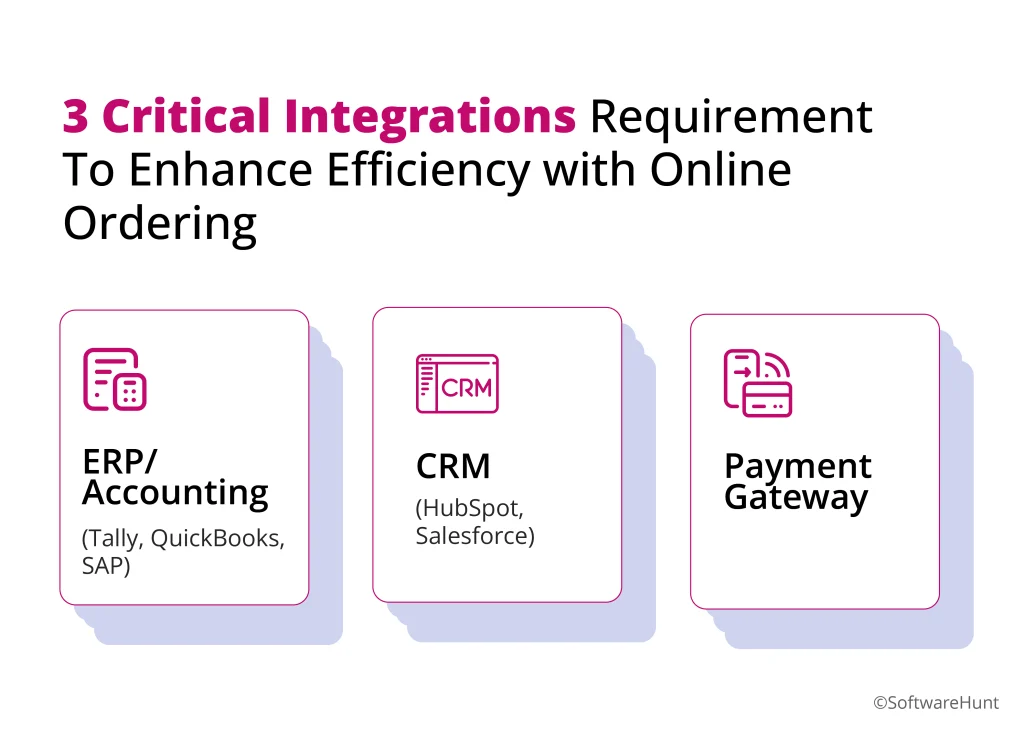
Your four critical integrations:
ERP/Accounting (Tally, QuickBooks, SAP)
Every order auto-syncs. Invoicing happens automatically. No double entry. No discrepancies between what the portal says and what accounting says.
CRM (HubSpot, Salesforce)
Customer data flows both ways. Your sales team sees order history. Your support team sees what’s pending. One source of truth.
Payment Gateway
Customer makes payment in the portal. It auto-syncs. No manual reconciliation. No checking email to confirm payment arrived.
Logistics Partners (major carriers in your region)
Order confirmed, shipping label prints automatically. Tracking links go back to customer. They see status in real-time without calling you.
Most vendors now offer pre-configured integrations. 2-4 week setup, not months. You’re not building custom code. You’re turning on connectors that already exist.
Key Insight: A portal without integration is a spreadsheet with a fancier interface. With integration, it becomes a system.
Numbers Behind Digital Ordering
Let’s be specific. Mid-market distributor, ₹5 crore revenue, 100 customers, 150 SKUs.
Year 1 Investment: ₹2,04,000
- Software: ₹12K/month × 12 = ₹1,44,000
- Setup and implementation: ₹30,000
- Training: ₹20,000
- Integration: ₹10,000
Year 1 Savings: ₹5,28,000
- Error elimination: ₹5K/month × 12 = ₹60,000
- Labor reallocated: ₹25K/month × 12 = ₹3,00,000
- Pricing disputes gone: ₹6K/month × 12 = ₹72,000
- Support overhead reduced: ₹8K/month × 12 = ₹96,000
Year 1 Net: ₹3,24,000 profit. Payback: 4.6 months.
Years 2-3: No setup costs. ₹3,84,000 profit per year.
Three-year total: ₹11,28,000 return on ₹2,04,000 = 553% ROI.
Plus: Revenue lift from 24% higher sales productivity, 51% higher overall revenues, and data insights that optimize your inventory and purchasing decisions.
Key Insight: This isn’t speculative. These are real numbers from real implementations.
Is Digital Ordering Your #1 Priority?
Before you invest time and money, ask yourself five quick questions:
1. How many orders per month? Under 100 (skip this), 100-500 (maybe), 500+ (do it now)
2. What’s your error rate? Under 1% (skip), 1-3% (maybe), 3%+ (do it now)
3. How many hours weekly on manual data entry? Under 5 (skip), 5-15 (maybe), 15+ (do it now)
4. Customer-specific pricing? No (skip), Yes, 5-10 tiers (maybe), Yes, complex (do it now)
5. Losing orders to faster competitors? Never (skip), Sometimes (maybe), Regularly (do it now)
Your Score:
- 0-2 checks: Don’t implement digital ordering yet. Optimize your WhatsApp process first.
- 3-4 checks: Evaluate 2-3 platforms. Likely positive ROI in 2-4 months.
- 5 checks: Implement immediately. This is costing you real money every month.
Not sure which operational leak is biggest – ordering, inventory, costing, or receivables?
Email connect@softwarehunt.com with your scores on the 5 questions above. We’ll help you prioritize what to fix first (at no cost to you).
Your 12-Week Implementation Roadmap
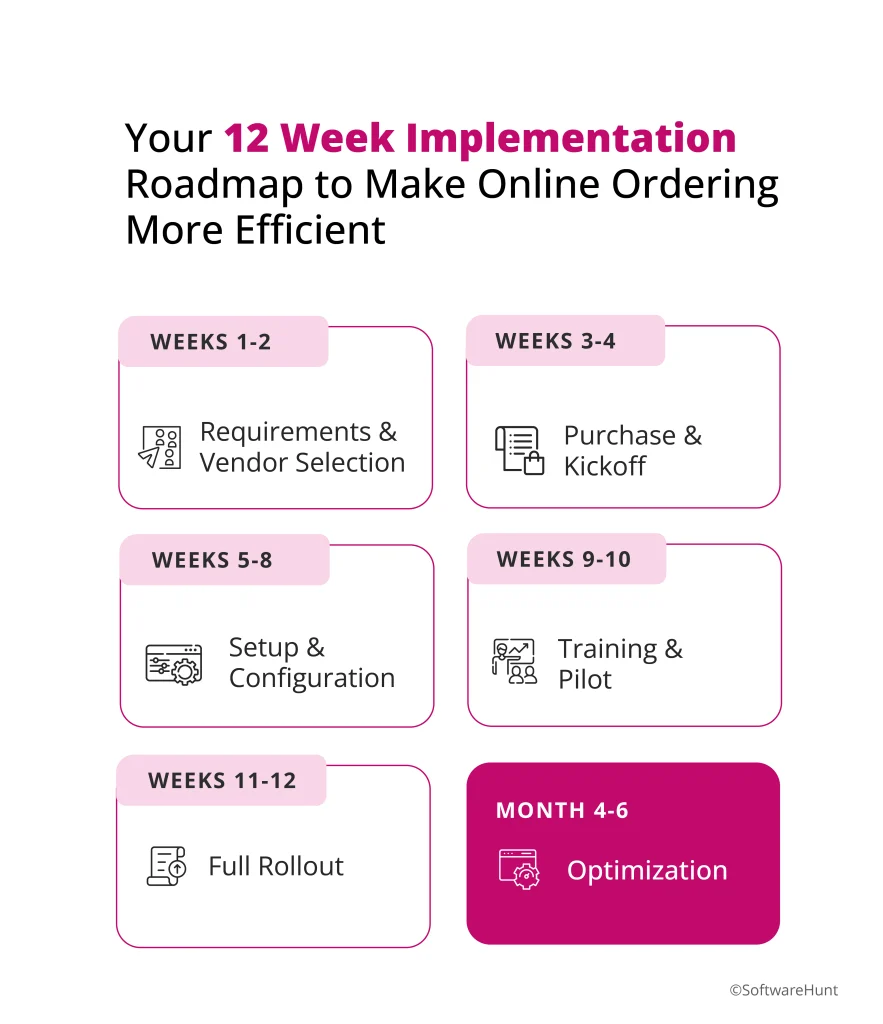
Weeks 1-2: Requirements & Vendor Selection
You’re identifying what you need (inventory across how many locations? customer-specific pricing rules? approval workflows?). You’re demoing three vendors. You’re getting team buy-in.
Weeks 3-4: Purchase & Kickoff
You’ve signed the contract. You’re uploading your initial catalog (SKUs, pricing, descriptions). You’ve assigned someone to own this project.
Weeks 5-8: Setup & Configuration
You’re building the rules: How do different customers see different pricing? Which inventory feeds which location? What happens when someone orders out-of-stock items? You’re testing integrations with your accounting software.
Weeks 9-10: Training & Pilot
You go live with 5 customers. You’re watching for bugs, misconfigurations, integration issues. You’re training your internal team.
Weeks 11-12: Full Rollout
Everyone’s migrated. You announce: Portal orders within 2 hours. Email/WhatsApp orders within 48 hours. It incentivizes adoption naturally.
Month 4-6: Optimization
You’re tracking metrics. You’re adding features (auto-reorder, bulk uploads, loyalty). You’re watching the operational improvement compound.
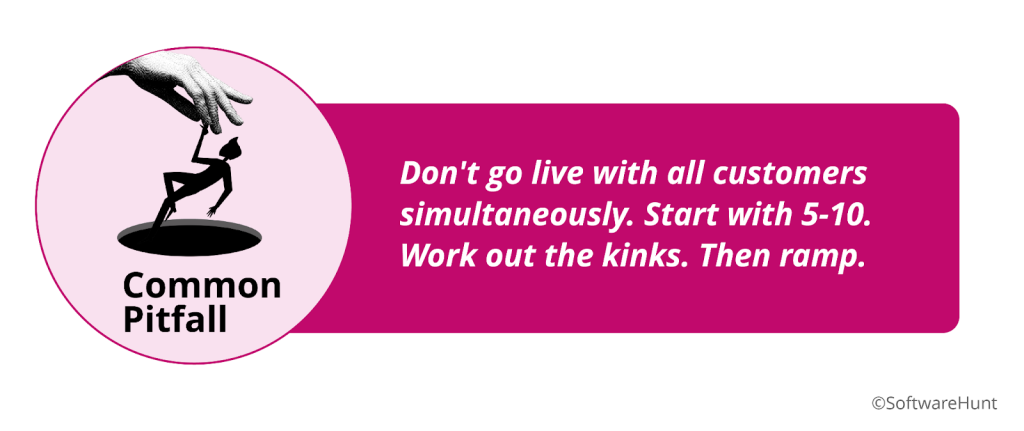
Key Insight: Fast doesn’t mean rushed. Realistic timelines reduce failure risk.
Security and Compliance Essentials
You need to verify three things:
Where does data live? Under IT Act Section 69A, government can request access. Your data must be in India. Ask: Which data centers? If they say Virginia or Singapore, walk away. India-based servers only.
GST e-invoicing integration. If revenue less than ₹50 lakh, you legally must e-invoice. Confirm your portal auto-syncs with GSTN.
Security checklist:
- SSL encryption (site shows secure)
- Role-based access control (different team members, different permissions)
- Daily backups (3+ locations, 1 off-site minimum)
- Audit logs (you can see who accessed what, when)
Key Insight: This isn’t overcautious. This is the difference between a system you can trust and one that becomes a liability.
Success Story: Bright Distributors, Guwahati
The Setup: FMCG distributor, ₹3.5 crore revenue, 80 retail customers across Assam and Meghalaya, 12 team members.
The Problem: Everything manual. WhatsApp orders, Excel inventory, phone calls for everything. Biggest customer complaint: Why does it take 36 hours to respond?
The Solution: Zoho One, ₹7,000/month. Three-week implementation.
Weeks 1-3: Chaos. Team grumbled. Customers complained. They questioned the decision.
Week 8: 70% of customers using the portal voluntarily.
Month 6 Results:
- Order accuracy: 96% → 99.8%
- Disputes: 20-30/month → 3
- Order cycle: 36 hours → 4 hours
- Customer satisfaction (NPS): 32 → 52
- Monthly savings: ₹90,000
The kicker: They didn’t eliminate anyone. They reallocated. The person spending 6 hours/day on data entry now spends 2. Those 4 hours go to customer calls, relationship building, sales support.
Within one year, they’d handled 40% volume growth without adding headcount.
Take the Next Step
The question isn’t whether to implement online ordering. It’s how much inefficiency you’re willing to tolerate while your competitors pull ahead.
If you’re bleeding ₹100K monthly in hidden costs and wait six months, you’ve lost ₹600K. Your competitor implemented six months ago. They’re now handling your volume at half the cost, pricing more aggressively, offering faster delivery, and winning customers you’re losing.
Here’s your four-step action plan:
- Audit your real costs (this week): Calculate labor inefficiency, errors, delays, disputes, support overhead. Email us for a free cost calculator.
- Talk to three vendors (next week): One enterprise platform, one SME-focused platform, one local provider.
- Run a pilot (month 1): Pick 5 friendly customers. Free trial. Track adoption rate.
- Commit to rollout (month 2): If pilot shows >60% adoption, commit to full migration.
We’re SoftwareHunt. We work with manufacturing owners running on Excel, Tally, and tight cash flows. Our advisors help you identify operational leaks like hidden setup costs and overhead allocation errors and translate symptoms into clear financial decisions. We show you where to focus first, at no cost to you.
Email us: connect@softwarehunt.com