TL;DR
- 72% of manufacturing tasks remain manual. Excel and WhatsApp can’t provide real-time visibility, problems are discovered hours after they happen, preventing proactive adaptation.
- Five decision points determine success. Order intake, BOM validation, production tracking, inventory reconciliation, and order-to-cash closure. Most manufacturers fail at all five simultaneously.
- The problem isn’t effort; it’s structure. Common workarounds (hire Excel expert, run parallel systems, weekly reconciliation) don’t fix the underlying design flaw. They delay collapse.
- Diagnosis comes before implementation. Identify which decision point costs you most. Fix that first. Then scale. No need for expensive, complex system overhauls.
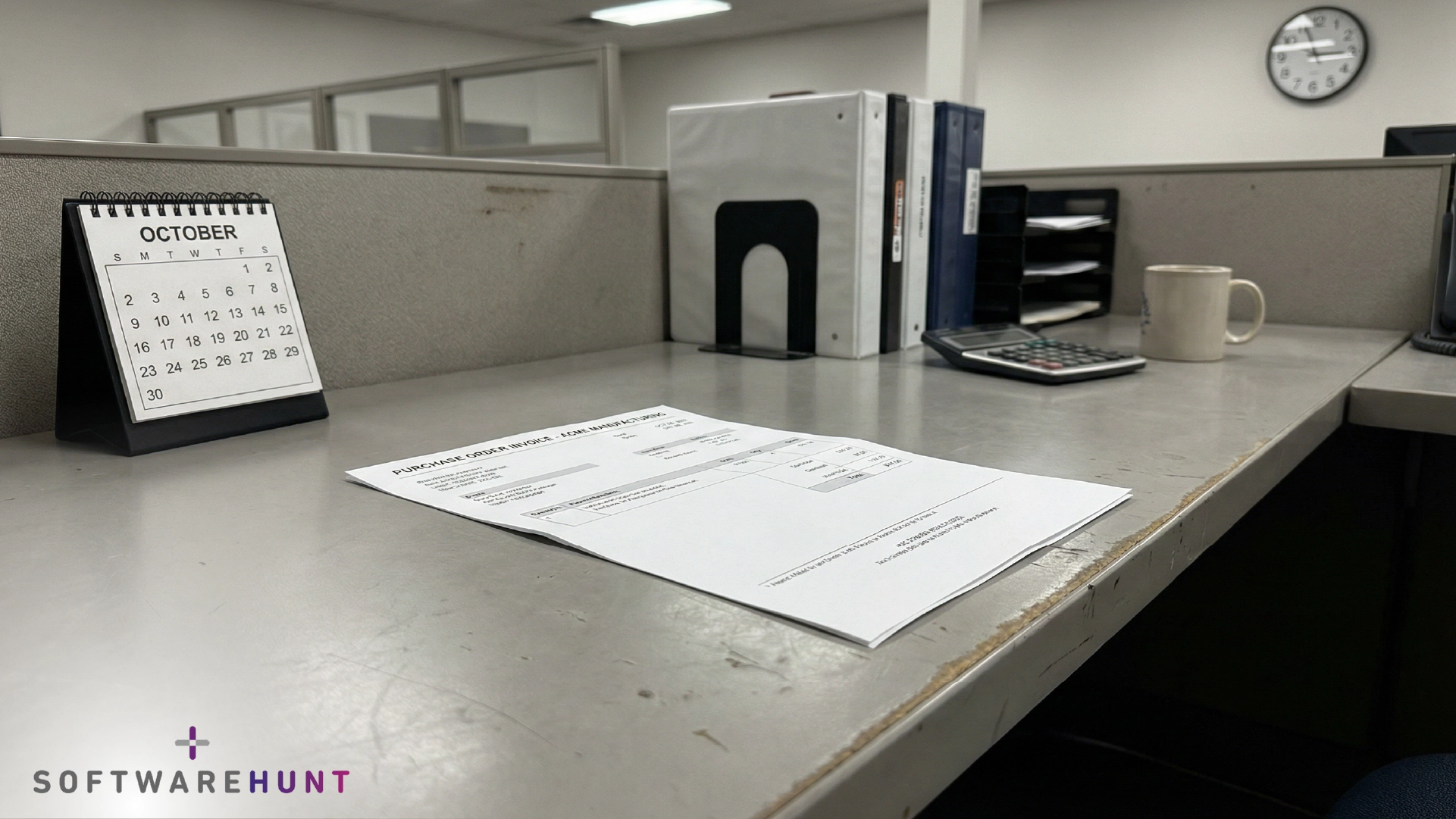
It was a Tuesday morning in October 2024 when their largest customer, an auto-parts retailer, called to complain. The delivery was three days late. The manufacturer’s owner checked his records: the order was confirmed in WhatsApp, production notes were scattered across an Excel sheet from two weeks ago, and the shipping date? That existed in someone’s inbox, buried under 300+ messages.
What should have taken a conversation turned into a three-person investigation. By the time they found the actual issue (a typo in the material specifications entered during handover), the damage was done. The customer imposed a 5% penalty on future orders. The order sat in the warehouse for two more days while the team manually reprocessed everything.
This wasn’t a mistake. This was a structural failure.
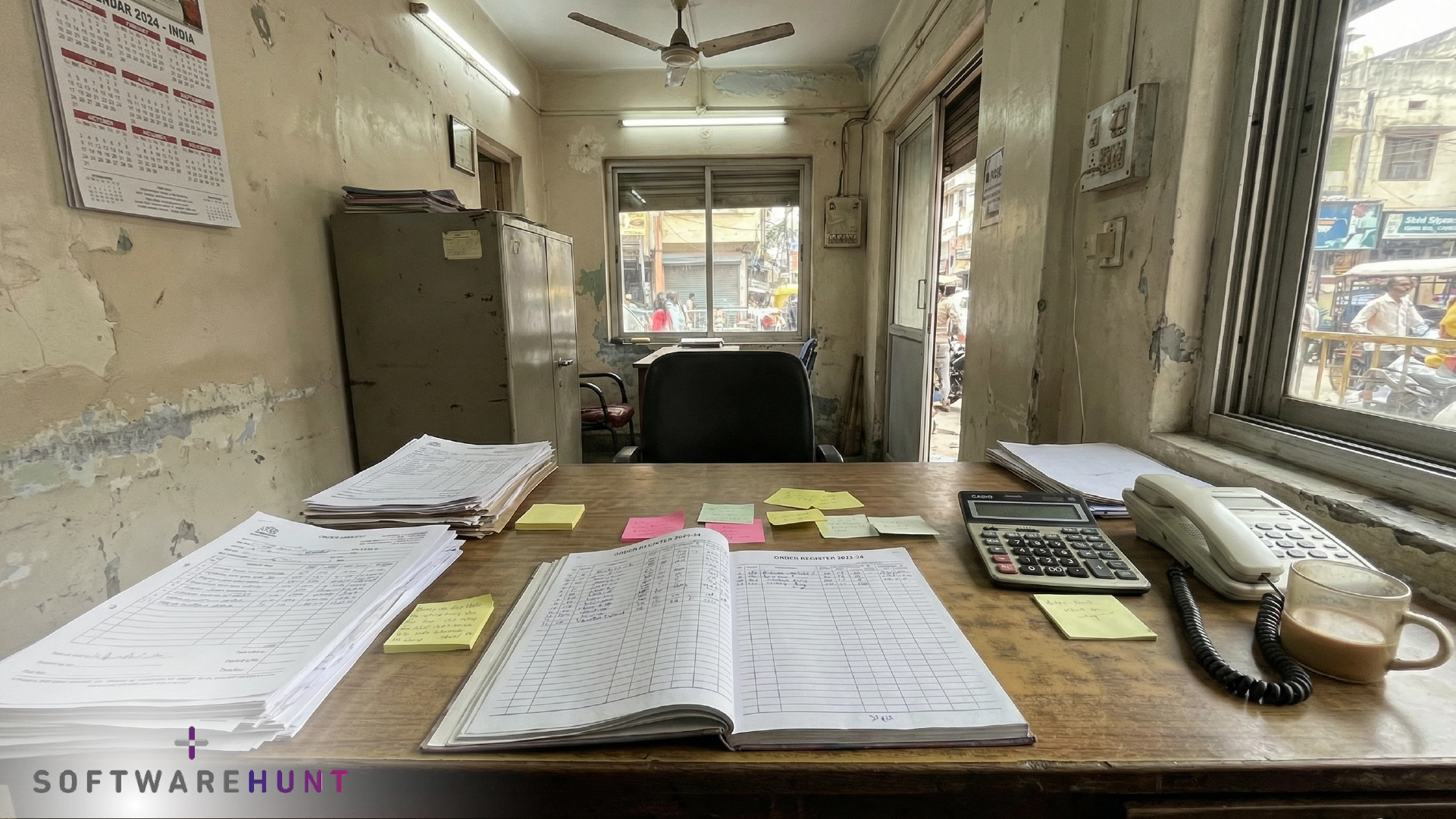
This is the reality for thousands of Tier 2 and Tier 3 SMEs across India that manage operations using a combination of Excel spreadsheets and WhatsApp groups.
For a team managing 30 orders a month? Excel and WhatsApp get the job done.
For 300 orders? The system collapses under its own weight.
The question isn’t whether you’re struggling. It’s which specific point in your manufacturing process is bleeding money right now.
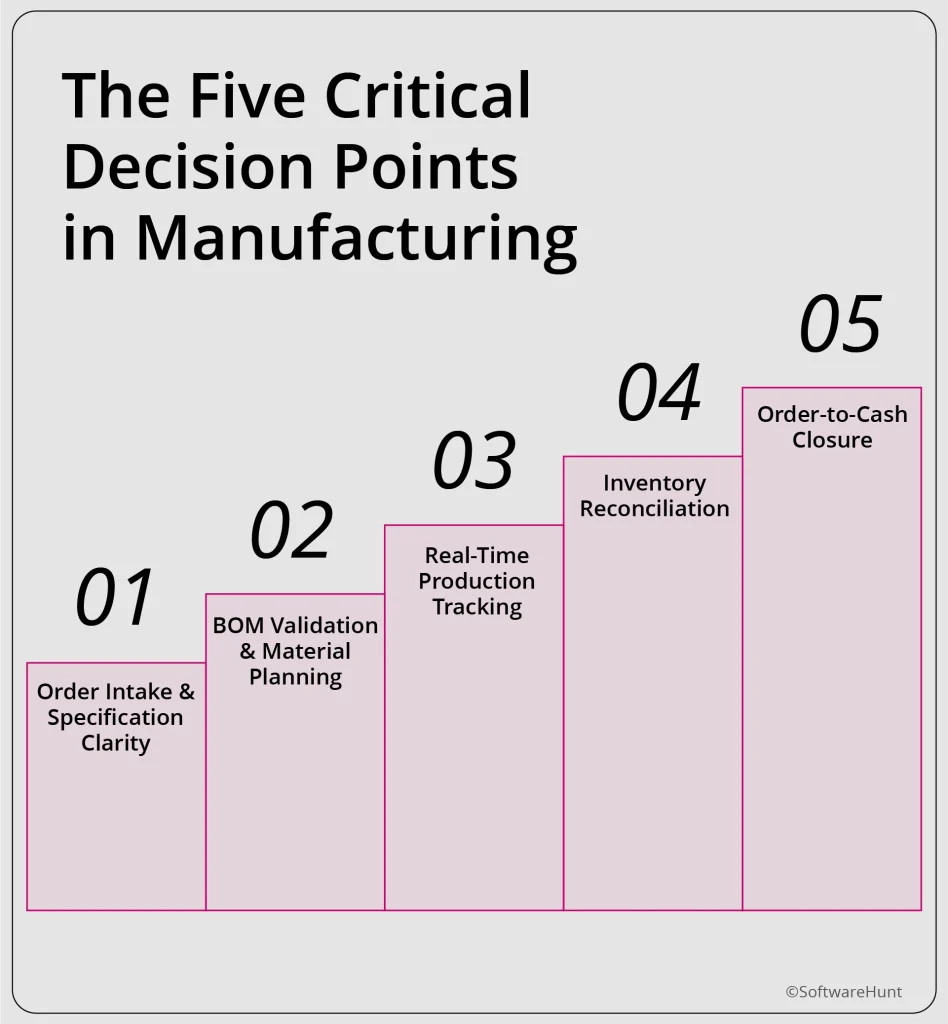
The Five Critical Decision Points in Manufacturing
Every manufacturing operation has the same basic flow. And every flow has five moments where accuracy determines success or failure.
Decision Point 1: Order Intake & Specification Clarity
Your customer sends an order. Sometimes it’s structured. Often it’s scattered across a 10-message WhatsApp thread with ambiguous specs, changing quantities, and unclear delivery dates.
Your team has to extract meaning from conversation. Someone writes down the critical details. Someone else re-enters them elsewhere. By the third handoff, there’s a 15-20% chance the specs are wrong.
This is where the first error is born.
Decision Point 2: BOM Validation & Material Planning
Now you have the spec. Your production planner opens Excel to check the Bill of Materials (BOM). They verify material availability. They check reorder points.
Here’s where Excel shows its limitation: there’s no validation layer.
A typo like entering “100” instead of “1000” units gets entered silently. No system stops it. No alert fires. Production planning proceeds on false data.
The research is clear on this: Over 90% of operational spreadsheets contain errors. And most manufacturers never discover the mistake until production halts mid-schedule.
Decision Point 3: Real-Time Production Tracking
The job is scheduled. The shop floor starts work.
72% of manufacturing tasks are still handled manually meaning your production manager discovers problems hours after they happen, not in real time.
A machine breaks down at 7 a.m. By the time someone walks the shop floor, it’s 9 a.m. You’ve lost two hours. By the time the problem gets communicated to procurement, another hour passes. Material doesn’t get expedited. Delay compounds.
Excel shows yesterday’s data. WhatsApp buries the update in noise. Nobody proactively adapts.
Decision Point 4: Inventory Reconciliation
This is where working capital gets trapped.
Your system says you have 500 units in stock. Physical count shows 480. Where are the 20 units? Lost in the warehouse? Incorrectly logged? Damaged?
You spend two hours hunting. You don’t find them. You Manual order 50 more units as buffer stock – emergency purchase, higher cost. Those extra units sit there for six months unused. Dead stock. Capital tied up.
52.85% of products have discrepancies in their inventory records. In a typical 9,000-SKU warehouse, that’s over 3,000 items with wrong counts.
Each discrepancy costs you time, confusion, and working capital.
Decision Point 5: Order-to-Cash Closure
Order is fulfilled. Now it needs to be invoiced and paid.
In a manual system, this requires re-keying data
order number → customer name → quantities → pricing → tax calculations
Each re-key is an error opportunity.
Your order-to-cash cycle stretches from a best-in-class 3-5 days to a manual system’s 15-25 days. On ₹1 crore monthly revenue, that’s ₹50-70 lakh unnecessarily tied up in receivables.
You’re essentially giving free credit to your customers.
Why This Happens (It’s Not About Effort)
Stop here. This isn’t about your team not trying hard enough.
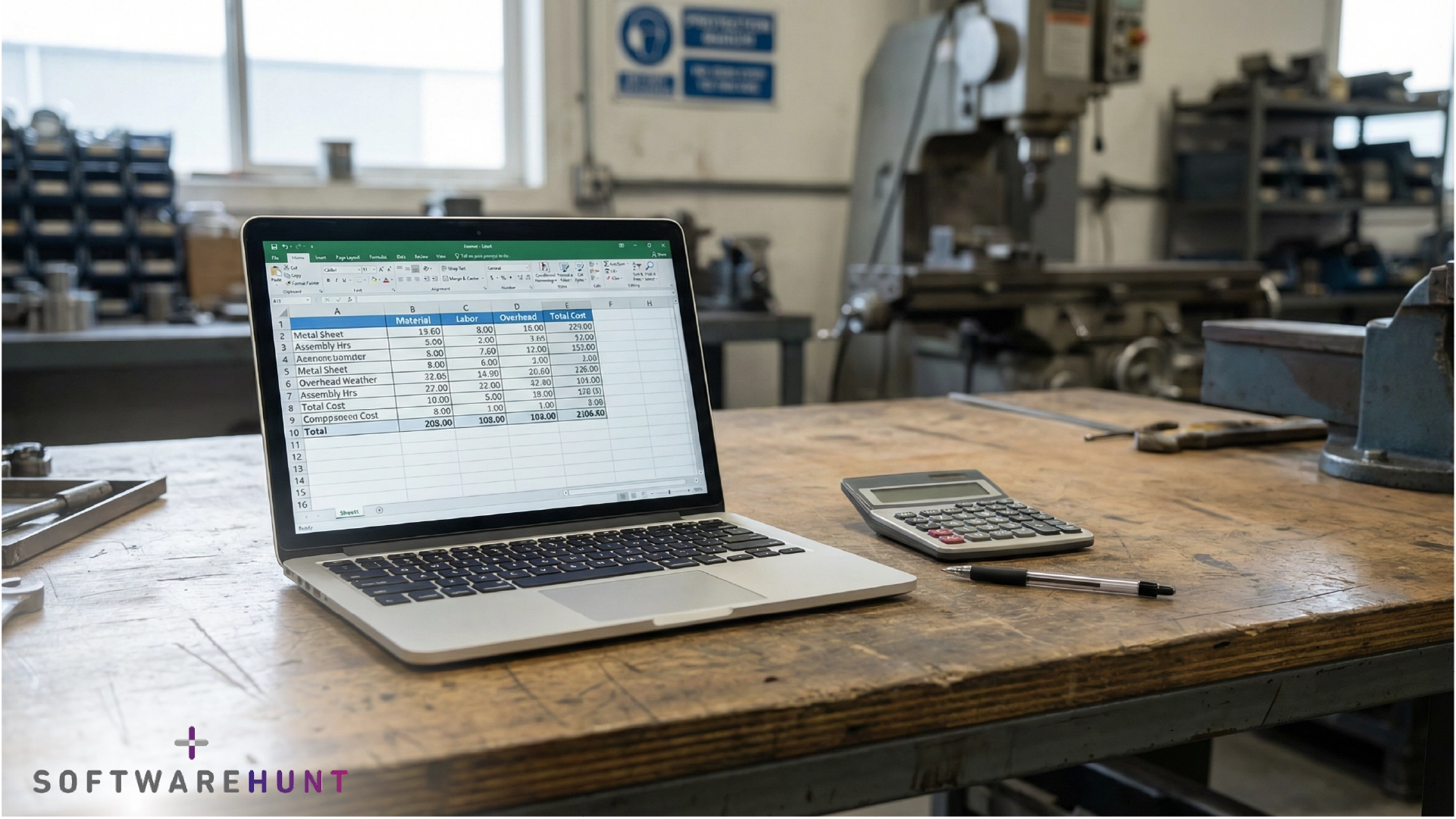
Excel was built for analysis: financial modeling, data exploration, historical reporting. It was never designed for real-time transaction management.
WhatsApp was built for person-to-person communication: quick updates, casual coordination. It was never designed for structured workflow management, task ownership, or historical traceability.
Put them together and you have two tools fighting each other’s weaknesses while amplifying their individual limitations.
As your business grows, the system doesn’t scale proportionally. It collapses geometrically.
The Hidden Cost Arithmetic in a Manufacturing Company
Let’s quantify what this actually costs for a 50-person manufacturing operation.
Time Cost: ₹2.7 Lakh Per Year
Your team spends 3 hours daily on manual data entry across Excel sheets. Five people doing this work at ₹300/hour.
3 hours × 5 people × ₹300/hour × 250 working days = ₹22,500 per month = ₹2.7 lakh per year.
That’s money spent on preventing chaos, not creating value.
Production Delay Cost: ₹12 Lakh Per Year
Miscommunication causes production delays. Not because your team is slow, but because information travels through noise.
If you experience two delays per month and most manual systems do each costing ₹50,000 in missed revenue or rework, you’re looking at ₹12 lakh annually.
In many cases, this is an underestimate.
Inventory Carrying Cost: ₹15-25 Lakh
Dead stock tied up in your warehouse. Safety stock is ordered as a buffer because you can’t trust your system. Obsolescence creeping in.
A typical 50-person manufacturer has ₹15-25 lakh in inventory that shouldn’t exist. That capital is locked away from growth, marketing, or operational improvements.
Order-to-Cash Working Capital: ₹50-70 Lakh
Your receivables cycle is 20 days instead of 5 days because invoicing requires manual re-keying and reconciliation.
On ₹1 crore monthly revenue, that’s ₹50-70 lakh unnecessarily tied up.
You’re operating with less cash than you should have. You’re taking longer to pay suppliers. Your cash conversion cycle suffers.
Compliance Risk: ₹50L+ Potential Exposure
Your Excel sheets have no audit trail. If a quality issue emerges, you can’t trace which batch, which operator, which conditions.
If your manufacturing touches regulated industries (auto, pharma, food), a compliance audit failure could cost ₹50 lakh to ₹1 crore in fines and remediation.
Most Tier 2/3 manufacturers haven’t hit this yet. But as you scale into bigger customers, the risk becomes real.
Total Impact: ₹28+ Lakh Annually
And that’s just what we can quantify. Add in the owner’s frustration, the team’s morale hit, the missed sales calls because you’re firefighting internal chaos—the real number is higher.
Our team is happy to connect with you, understand your personal pain points, operational leaks and growth challenges and go beyond platform listings/information to help find the right solution for you at no cost to you.
Email an advisor for a quick fit-check write to us at connect@softwarehunt.com
What a Healthy Manufacturing Operation Actually Looks Like
This is important: understanding the problem isn’t enough. You need to see what the solved state looks like.
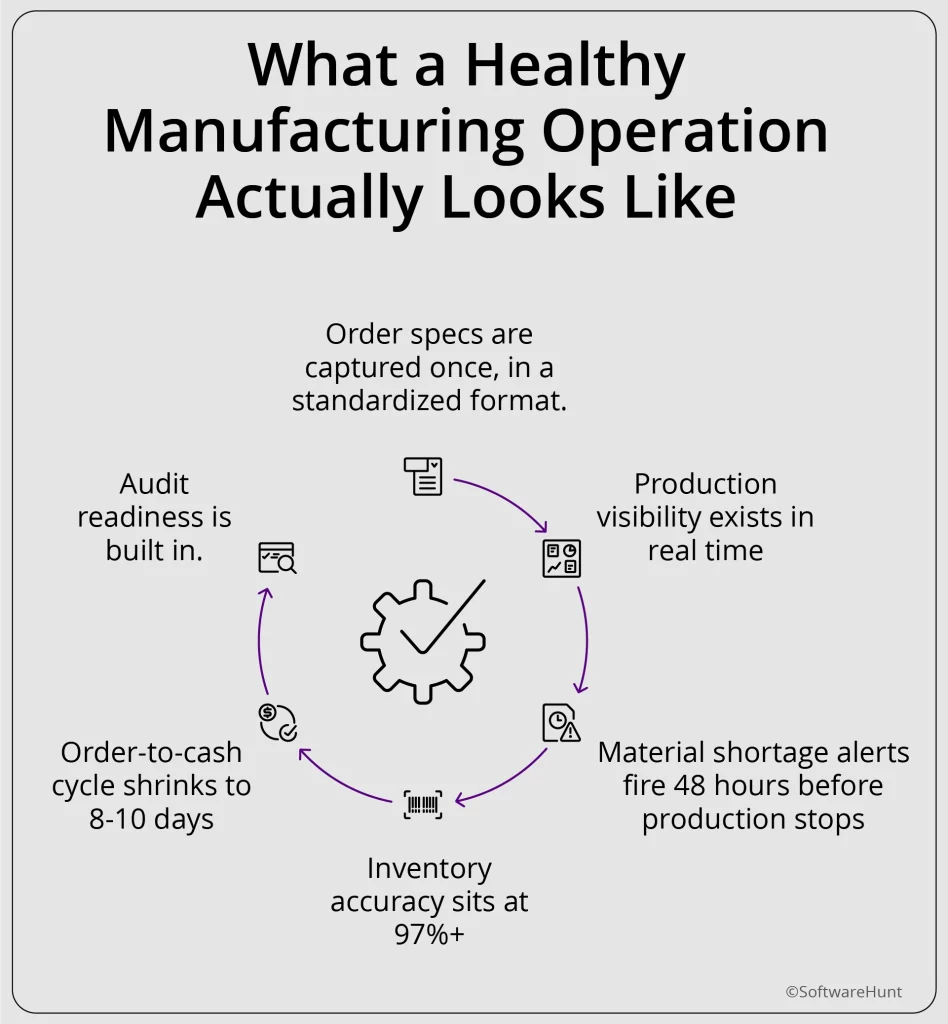
Order specs are captured once, in a standardized format. Not scattered across WhatsApp. Not re-entered three times. Captured once. Used everywhere.
Production visibility exists in real time. The owner checks order status in under one minute. Not “send email to production manager, wait for response.” Not “walk the shop floor.” One minute, accurate data.
Material shortage alerts fire 48 hours before production stops. Not a crisis discovered mid-production. A proactive alert that gives you time to expedite or reschedule. This is the difference between reactive and adaptive manufacturing.
Inventory accuracy sits at 97%+. Physical counts match system within 2-3%. Your finance head reconciles in 20 minutes, not 2 days. Working capital turns faster because you trust your numbers.
Order-to-cash cycle shrinks to 8-10 days. Invoice errors drop from 80% manual touch to 16% or lower. ₹25-45 lakh in working capital gets released back to your business.
Audit readiness is built in. Complete trail of who touched what, when, and why. Batch traceability from raw material to finished goods. An audit becomes a documentation review, not a crisis investigation.
This state is achievable. It doesn’t require replacing every system. It requires fixing the structural gaps at the decision points that matter most.
Diagnostic Self-Check: Where Is Your Process Breaking?
Here’s how to identify your critical pain point.
At Order Intake: How often do you discover missing or ambiguous specs mid-production? If it’s more than once a month, your order capture process is failing.
At Material Planning: Can you generate accurate, updated inventory in less than 30 minutes? If not, your visibility into availability is the bottleneck.
At Production Tracking: How far behind do you learn about production delays? Hours? Same day? Next day? The longer the lag, the more cascading errors accumulate.
At Inventory Reconciliation: What percentage variance do you find between physical count and your system? Above 5%? That’s a structural problem, not a counting error.
At Order-to-Cash: How many days pass from order to payment in your bank account? If it’s more than 15 days, invoice accuracy and reconciliation are eating your cycle time.
Score yourself on these five points. One issue suggests your process is reasonably healthy, just needs optimization. Four or five issues suggest systemic dysfunction that requires structural redesign.
The Tier 2/3 SME Reality
Before we go further, let’s acknowledge the constraints you’re working within.
You can’t afford a ₹5-15 lakh ERP implementation. The cost is prohibitive. The implementation timeline is three to six months. The risk of a failed rollout is real.
You don’t have an IT team. The owner is managing sales, operations, finance, and now troubleshooting systems? That’s not sustainable.
Your finance head uses Tally because that’s the ecosystem for Indian GST compliance and accounting. Any new system has to integrate with Tally, not replace it.
So you reached for Excel and WhatsApp because they’re free, everyone knows them, and they worked when you were smaller.
Workaround 1: Hire an Excel expert
Someone who understands the spreadsheets, maintains them, updates them. Sounds logical.
What actually happens: That person becomes a single point of failure. When they take leave, production slows. When they leave the company, critical knowledge walks out the door. You rebuild everything from scratch.
Workaround 2: Run parallel systems
Finance tracks Tally, Operations tracks Excel, Sales tracks WhatsApp. Everyone updates their own version of the truth.
The result: Three systems that don’t talk to each other. Finance can’t reconcile with Operations. Operations can’t plan with Sales data. You’re creating fragmentation, not solving it.
Workaround 3: Weekly manual reconciliation
Every Friday, someone spends four hours reconciling Excel against physical counts, against Tally, against pending orders.
This is theater. You’re not fixing the system. You’re documenting its failures once a week. And four hours later, you’re out of sync again.
Workaround 4: Enforce communication discipline
Read receipts on WhatsApp. Pinned messages for critical updates. “Everyone check the Excel sheet before starting.”
This feels like control. It’s actually just false comfort. You’re asking people to compensate for a broken system instead of fixing the system.
Most manufacturers skip proper diagnosis of what’s breaking and jump directly to workarounds. Then they blame themselves for not executing hard enough.
The problem is structure.
Why This Matters Right Now
Two things are changing in 2026 that make this urgent.
First: Competition is intensifying.
FDI in India’s manufacturing sector jumped 18% in FY 2024-25, reaching $19.04 billion. New players are entering your category. Global manufacturers are looking at India as an alternative to China. Your customers’ expectations are rising.
You can’t compete if 3 hours of your day is spent managing spreadsheets instead of improving products, building relationships, or capturing new business.
Second: Your customers are demanding more visibility.
Tier 1 auto suppliers now require batch traceability. Pharma manufacturers need compliance documentation. FMCG partners want real-time inventory visibility.
You can’t provide what you can’t track. And Excel + WhatsApp can’t track with the precision that modern supply chains demand.
The manufacturers solving this aren’t replacing everything overnight. They’re starting with the one or two decision points that bleed the most, fixing the structure there, then expanding.
That’s the diagnostic approach: Don’t buy a new system. Diagnose which decision point is costing you most. Then solve for that specific point. Then scale.
Where to Start
The first step isn’t implementation. It’s a diagnosis.
Map your order-to-delivery process. Identify which of the five decision points causes you the most friction: unclear specs? Material shortage surprises? Production delays? Inventory confusion? Invoice errors?
Most manufacturers think they know the answer. They’re often wrong. They optimize the wrong point while the real bleed continues elsewhere.
A structured diagnostic conversation with someone who understands manufacturing operations can clarify this.
Then you know what to build toward.
We’re SoftwareHunt. We work with manufacturing owners running on Tally, Excel, and lean teams to understand your operational leaks and growth challenges. We go beyond platform listings to help you find the right solution at no cost to you.
We’ll help you translate symptoms into clear financial insight and show you where to focus first – at no cost to you.
To email an advisor for a quick fit-check write to us at connect@softwarehunt.com